


Full Name in Ukrainian: Марія Данилівна Венец (Венець); Марія Венец (Венець)
Full Name in English: : Mariia Venets; Mariia Danylivna Venets
Data of Birth: 1928
Place of Birth: Starosillia
Raion: Horodyshche raion (currently Cherkasy raion)
Oblast: Kyiv oblast (currently Cherkasy oblast)
Country: Ukraine
Copy of original: Yes
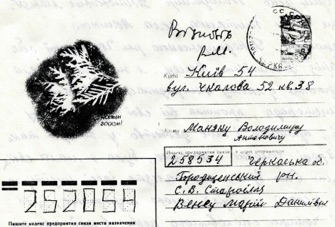
Envelope: Yes
Number of pages: 20
Keywords: Ukraine--History--Famine, 1932-1933--Personal narratives; Famines--Ukraine--History--Sources; Famine victims; Holodomor; Голодомор; food substitution; survival strategies; family mortality; ration; begging; barter; perpetrators; victims; child; 1946-1947 Famine; life-long deprivation.
Notes: Edited and abridged transcription of Maria Venets’ letter is published in 33ii: Holod: Narodna Knyha-Memorial. Kyiv: Radiansky pysmennyk, pp. 239-241.
Accession Number: 2007.2-4007


SYNOPSIS

The UCRDC depends on voluntary donations – both individual and institutional - for its financing.
It provides receipts for tax purposes.


-
‣Home
Mariia Venets was born in 1928 and survived the Holodomor in the village of Starosilli in Horodyshche raion of Kyiv oblast (currently Cherkasy raion of Cherkasy oblast). Her mother was making a living by working in the fields and making 400 gm of bread for herself and 200 gm per each of her two children. That was not sufficient for Mariia’s little brother Vania (b. 1931) and her grandmother Yavdokha, who died of malnutrition. Mariia remembers that her mother was also collecting food waste and dead animals from the neighbors and using ground corncobs mixed with a bit of flour to make some semblance of bread. They also ate weeds to survive. Mariia’s mother had to walk 7 km each way to work and back. Venets remembers fondly Vekla Kucherenko, who gave her mother potato peels so that she could plant them to grow potatoes. Vekla’s husband worked in the village council and was a Communist party member. For that, their family was executed by the Nazis during WWII.
Venets also recalls how she went to Western Ukraine during the 1946-1947 Famine. She was 19 at the time, the oldest daughter in the family. Her father died of a lung disease shortly after he was released from German captivity. She tried to find work but ended up begging - walking to people’s homes and asking for food. There were so many people begging at that time, that the locals were refusing to give any food or even overnight shelter to the beggars. They were afraid of being robbed. One kind soul, a Czech woman, the widow of a local Ukrainian, let Mariia and another, even younger girl, into her home. She fed them and gave each a loaf of bread and half-bucket of potatoes for the road. Mariia and the other girl helped the Czech woman to plant potatoes and onions in her garden. Venets also remembers another woman, who had just pulled out bread, pies and two pots of boiled potatoes from the oven, and refused to give her even one potato. She even said that she was going to feed potatoes to pigs. That memory was still so traumatic to Venets at the time of writing the letter, that it made her shake thinking that someone valued a pig more than a human life.
Venets describes difficulty in creating a family, building a home, working in the beet field, and having almost nothing after the war. In 1948, she and her husband slept on the same coats (kufaikas) which they wore outside for work. Her husband had only one pair of pants that she washed and hung to dry next to a stove before going to bed, and in the morning, he had to wear the same pants whether they were dry or still wet.
Venets calls “the true cannibals” not the desperate, often mentally damaged mothers who ate their children, but Stalin and his servants Kaganovich, Molotov, and Voroshylov, who were betraying and killing their friends and their families. She believes that their legacy is still alive. There are people like her, who worked hard all their life and don’t have much to show for years of work. She does not care about possessions as long as she has enough to eat. However, there are still leaders (at all levels) who get undeserved credit and benefits and have power to punish people for telling the truth, as happened in the past.
Venets insists that her letter and name be published. She is not ashamed of begging during hard times, when so many people experienced hardships. Neither is she afraid to get imprisoned for what she wrote in the letter because her life is coming to an end.