


Full Name in Ukrainian: Микола Максимович Вальчик; Микола Вальчик
Full Name in English: Mykola Maksymovych Valchyk
Data of Birth: 1921
Place of Birth: Skarzhyntsi
Raion: Ulaniv raion (currently Khmelnytsky raion)
Oblast: Vinnytsia oblast (currently Khmelnytsky oblast)
Country: Ukraine
Copy of original: Yes
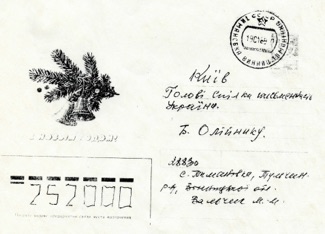
Envelope: Yes
Number of pages: 4
Keywords: Ukraine--History--Famine, 1932-1933--Personal narratives; Famines--Ukraine--History--Sources; Famine victims; Holodomor; Голодомор; perpetrators; victims; grain requisitioning; confiscation; large family; family mortality; food substitution; survival strategies; child labour; ration – collective farm; burial; cannibalism; kulaks; kurkuls.
Notes: This letter is not included into the memorial book.
Accession Number: 2007.2-1030


SYNOPSIS

The UCRDC depends on voluntary donations – both individual and institutional - for its financing.
It provides receipts for tax purposes.


-
‣Home
Mykola Valchyk was born in 1921. He was the second child in a poor father's family with eight children. His parents owned a cow. They had 0.3 hectares of land. His mom was paid in kind 50-60 kg of wheat for a season of her labour in the field, and his father was an office worker. The family had a cow that got stolen before the onset of the Holodomor, which made starvation for them more severe. In 1932, a search brigade confiscated beans and peas which the family stored in pots. They had no wheat to take away. To survive, after all the food was gone, they collected and cooked rotten potatoes and burdock. In spring of 1933, Mykola did not go to school. His mother was taking him with her to work in the collective farm so that they could get a ration each (it was a pot of a watery soup (balanda or bevka)). One portion they shared in the field and the other one they would take back home to feed other children in the family. This was clearly not enough as three of Mykola’s younger siblings died in May-June 1933. He helped his mother to bury them in shallow graves. Two other younger brothers who managed to survive fed on unripe poppyseeds in the collective farm field. His other anecdotal recollections include: some people, who had valuables, going to Kyiv to buy bread; an elderly couple dying after consuming rye bread they baked from the first rye they had collected – their stomachs could not handle it after prolonged starvation; and a case of familial cannibalism in his village. People were “dying like flies” in his village, and nobody seemed to care at the time. He questions the legitimacy of designation as kulaks (kurkuls) of hard-working people who were a backbone of agricultural production and whether the republican and oblast-level officials were responsible for the death of starvation of so many innocent people