


Full Name in Ukrainian: Єфросинія Сторожук; Фросина Сторожук
Full Name in English: Yefrosynіia Storozhuk
Data of Birth: 1902
Place of Birth: Zaluzhzhia
Raion: Teplyk raion (currently Haisyn raion)
Oblast: Vinnytsia oblast
Country: Ukraine
Copy of original: Yes
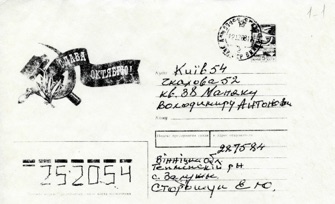
Envelope: Yes
Number of pages: 2
Keywords: Ukraine--History--Famine, 1932-1933--Personal narratives; Famines--Ukraine--History--Sources; Famine victims; Holodomor; Голодомор; perpetrators; victims; grain requisitioning; confiscation; family mortality; child mortality; prosecution.
Notes: Abridged and edited transcription of Yefrosyniia Storozhuk’s letter is published in Holod: 33ii: Narodna Knyha-Memorial. Kyiv: Radiansky pysmennyk, 1991, p. 92-93.
Accession Number: 2007.2-1001


SYNOPSIS

The UCRDC depends on voluntary donations – both individual and institutional - for its financing.
It provides receipts for tax purposes.


-
‣Home
Yefrosyniia Storozhuk’s (b.1902) recollection about the Holodomor is recorded from her words by her daughter. She describes the events that took place in the village of Zaluzhzhia of Teplyk raion in Vinnytsia oblast during the Holodomor.
Yefrosyniia’s husband had been a member of Komnezam (Committee of Poor Peasants) and then joined the collective farm. He was a collective farm member for a year when the grain procurement commission (which consisted of a commissar from Moscow and local activists) showed up at his house. He had previously surrendered his horse, wagon, plough, harrow, and cultivator to the collective farm and fulfilled all his grain procurement quota. However, the certificate confirming that he fulfilled the quota did not save the family from pillaging by the grain procurement commission. They took away the family’s cow, heifer, six sheep, two pigs, four sacks of grain and six sacks of potatoes (four of potatoes that they grew themselves and two of the ones they got as pay from the collective farm). The activists also confiscated all their clothes, destroyed the barn and stable, and kicked the family out of the house. When Storozhuk’s mother refused to leave the house, she got wrapped in a blanket and carried out of the house. Yefrosyniia was nursing and refused to leave the house.
Yefrosyniia’s husband served a six-month forced labour sentence. Her mother died after she ate by-products of alcohol distillation (braha) and two of her children died of starvation. Their neighbor Serhii Bezverkhnii buried nine children. She recalls that a lot of people, particularly children, were dying in the village at the time.