


Full Name in Ukrainian: Петро Макарович Соловищук; Петро Соловищук
Full Name in English: Petro Solovyshchuk
Data of Birth: 1921
Place of Birth: Leukhy
Raion: Haisyn raion
Oblast: Vinnytsia oblast
Country: Ukraine
Copy of original: Yes
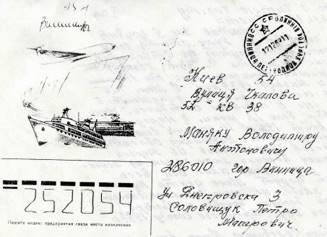
Envelope: Yes
Number of pages: 4
Keywords: Ukraine--History--Famine, 1932-1933--Personal narratives; Famines--Ukraine--History--Sources; Famine victims; Holodomor; Голодомор; family mortality; grieving; orphan; childhood; food substitution; act of kindness; burial; WWII.
Notes: An abridged and edited version of Petro Solovyshchuk’s letter is published in 33ii: Holod: Narodna Knyha-Memorial. Kyiv: Radiansky pysmennyk, 1991, p.152.
Accession Number: 2007.2-1028


SYNOPSIS

The UCRDC depends on voluntary donations – both individual and institutional - for its financing.
It provides receipts for tax purposes.

-
‣Home
Petro Solovyshchuk was born in 1921 in the village of Leukhy in Haisyn raion of Vinnytsia oblast. He is the sole Holodomor survivor in his family. His mother died in March of 1933. Then his two brothers and sister died in April of 1933. Petro and his father buried the children in the grave of their mother. Shortly after, Petro’s father died.
Solovyshchuk provides a vivid description of the events of the day when he discovered that his father died. His father’s body was picked up and thrown into a cart by a two-member burial brigade. Grieving for his father, Petro slept in a stable and survived on frozen potatoes and some stale bread that some elderly people gave him occasionally. He conveys profound sadness that he experiences because of the loss of this whole family, his father, and his childhood home.
Petro’s father was a solid farmer, judging by the description of their homestead – a house with a tin roof, two auxiliary buildings, а thresher, woodchipper, and other implements that he possessed. The house and the implements were destroyed, the materials, and eventually even the land on which it stood, were taken away.
Solovyshchuk served as a combat medic during WWII, was awarded an Order of the Red Star and a Medal "For Labour Valour".
He mentions that his village has approximately 800 homesteads and 3 cemeteries. Whole families were dying during the Holodomor and in each of three local cemeteries there are mass graves, large pits (kahaty) filled with bodies.