


Full Name in Ukrainian: Микола Іович Рурінкевич; Микола Рурінкевич
Full Name in English: Mykola Iovych Rurinkevych
Data of Birth: 1913
Place of Birth: Nova Huta
Raion: Nova Ushytsia raion (currently Kamianets-Podilsky raion)
Oblast: Vinnytsia oblast (currently Khmelnytsky oblast)
Country: Ukraine
Copy of original: Yes
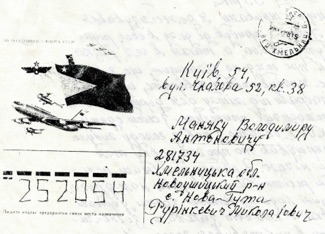
Envelope: Yes
Number of pages: 3
Keywords: Ukraine--History--Famine, 1932-1933--Personal narratives; Famines--Ukraine--History--Sources; Famine victims; Holodomor; Голодомор; perpetrators; Army; military service; victims; grain requisitioning; party officials; propaganda.
Notes: Abridged and edited transcription of Mykola Rurinkevych letter is published in Holod: 33ii: Narodna Knyha-Memorial. Kyiv: Radiansky pysmennyk, 1991, p. 47.
Accession Number: 2007.2-1012


SYNOPSIS

The UCRDC depends on voluntary donations – both individual and institutional - for its financing.
It provides receipts for tax purposes.


-
‣Home
Mykola Rurinkevych had returned from his service in the army to his native Nova Huta in Nova Ushytsia raion in Vinnytsia oblast just before the Holodomor began. He was not aware of the famine during his army service and heard about it first from his fellow villagers who witnessed people from Uman raion coming to his village to trade clothes for food. Those people were saying that all their grain was taken from them by the state. At the same time, the raion-level Communist party officials were visiting villages and telling the people a different story: that in Uman raion people hid the grain from the state by burying it in the ground where it rotted away, and that is why the famine began there. People in Nova Huta believed the official version of events until the state took away most of their grain from the harvest of 1932, leaving only some seed grain and animal feed. Once people did the sowing in the fall of 1932 and in the spring of 1933, the village authorities took away whatever little grain remained, and after that, starvation began. Although only 10 people died in Mykola’s village, he heard that many more people died in other villages, and there were cases of cannibalism for which the locals allegedly came up with their own punishment for perpetrators.
At a local market, Mykola once witnessed a group of hungry women scraping soil with their hands in a spot where some sunflower oil had spilt, and then putting it in their mouths to try to suck out the oil. He also addresses in his letter the falsehoods that were by the local party officials long after the Holodomor, namely, that honest and hardworking people did not suffer from starvation, and that only those who were lazy starved. Mykola asserts that just the opposite was true. Honest people were the ones who starved because they were incapable of stealing from the collective farm or from their neighbours’ houses in the village.