


Full Name in Ukrainian: Марія Ігнатівна Лубяна
Full Name in English: Mariia Lubiana
Data of Birth: Circa 1910
Place of Birth: Makarykha
Raion: Znamianka raion (currently Kropyvnytsky raion)
Oblast: Odesa oblast (currently Kirovohrad oblast)
Country: Ukraine
Copy of original: Yes
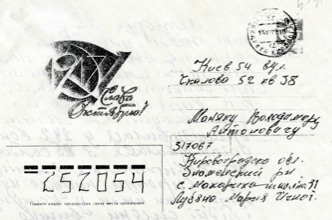
Envelope: Yes
Number of pages: 4
Keywords: Ukraine--History--Famine, 1932-1933--Personal narratives; Famines--Ukraine--History--Sources; Famine victims; Holodomor; Голодомор; search brigades; commune; forced requisitioning; imprisonment; 1937 repressions; burial; fear of persecution.
Notes: The letter is written in semi-literate Ukrainian. It is not included in the memorial book.
Accession Number: 2007.2-5010


SYNOPSIS

The UCRDC depends on voluntary donations – both individual and institutional - for its financing.
It provides receipts for tax purposes.


-
‣Home
Mariia Lubiana was born in 1910. She describes surviving the Holodomor in the village of Makharykha in Znamianka raion, Odesa oblast (currently Kropyvnytsky raion, Kirovohrad oblast). She writes in response to a call for letter that she read in the newspaper Silski Visti.
Lubiana was a member of a commune, an early form of collective farming, organized in her village in 1924 by soldiers returning from the war and owning nothing. They were poor and worked hard, and their life gradually improved. What the commune produced was not for sale. They kept everything for their own consumption.
In 1932, they had two-years worth of grain for themselves. When the head of the commune Kobyliatsky was given an order to surrender all the grain and livestock that the commune had, he refused. For that he was thrown in jail for two years. All the grain and food were taken away from the commune and the seven nearby collective farms by force, although the convoys that were taking the grain away carried banners proclaiming that the grain was delivered voluntarily.
After all food supplies were taken away, people started dying. Some were leaving their children in “the square” and dying themselves around the corner. Mariia remembers how a burial brigade took seven corpses from a hamlet of 11 homesteads in one day. They were all buried as they were – without coffins – all in one grave.
Despite the horrors that people witnessed, they were afraid to speak about their experiences because they feared persecution. In 1937, a few “good people” who organized the collective farms were prosecuted.