


Full Name in Ukrainian: Михайло Петрович Коваль; Михайло Коваль
Full Name in English: Mykhailо Petrovych Koval; Mykhailo Koval
Data of Birth: 1924
Place of Birth: Korytnia
Raion: Monastyryshche raion (currently Uman raion)
Oblast: Kyiv oblast (currently Cherkasy oblast)
Country: Ukraine
Copy of original: Yes
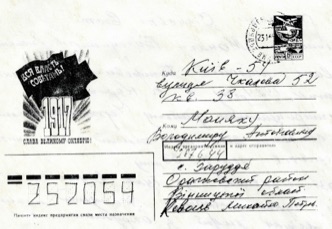
Envelope: Yes
Number of pages: 3
Keywords: Ukraine--History--Famine, 1932-1933--Personal narratives; Famines--Ukraine--History--Sources; Famine victims; Holodomor; Голодомор; search brigades; requisitioning; food substitution; survival strategies; physical deterioration; burial; family mortality; collectivization; Torgsin; child; child labour; ration; confiscation; eviction; goat.
Notes: Abridged transcription of letter is published in 33ii: Holod: Narodna Knyha-Memorial. Kyiv: Radiansky pysmennyk, 1991, p.101. Approximately 600 residents of Korytnia died during the Holodomor.
Accession Number: 2007.2 -1024


SYNOPSIS

The UCRDC depends on voluntary donations – both individual and institutional - for its financing.
It provides receipts for tax purposes.


-
‣Home
Mykhailo Koval was born in 1924 and survived the Holodomor in the village of Korytnia in Monastyryshche raion of Kyiv oblast (currently it is Uman raion of Cherkasy oblast). Mykhailo had four siblings, two of them died during the Holodomor. His father worked as a carpenter in the Donbas. When the collectivization started in his village, four collective farms were created in Korytnia, and a search brigade came to the Koval’s family home. They took the last sack of grain from the stove and half of the remaining sack of potatoes. One of the activists grabbed Mykhailo by his leg and threw him on the ground from the stove so hard that he was using makeshift crutches for two weeks. They also ordered for Mykhailo’s father to come back from the Donbas and join the collective farm or else the family home would be demolished. The Kovals’ neighbor Stepan Kozodoy lost his house and all his possessions this way. Mykhailo’s father returned to the village, joined a collective farm, and became a foreman in a construction brigade. Mykhailo was a shepherd to the family’s she-goat and helped his mother work in the beet fields. For their day’s work in the field, they were given a bowl of soup made from millet husk. Once, Mykhailo almost died after eating this soup, but he was saved by a local doctor.
Koval’s two siblings died after eating pancakes made of rotten potatoes that his mother made. His father took his wife’s silver jewelry (dukachi) to Torgsin and exchanged them for four loaves of bread. Mykhailo’s feet and hands were trembling when his father brought him a slice of that bread.
Koval recalls an exemplary commune (komuna, an early form of collective farming) which was created in the village of Khvylia (likely Khvylia Zhovtnia, currently Bubelnia). It had two two-storey buildings, a mobile power station, radio, “diner and bread.” People from the nearby village and raion centres were brought there to show what life will be like in a collective farm.