







Full Name in Ukrainian: Марфа Іванівна Гаркуша (Ковальовська)
Full Name in English: Marfa Harkusha (née Kovaliovska)
Data of Birth: 1922
Place of Birth: Nova Praha
Raion: Oleksandriia raion
Oblast: Dnipropetrovsk oblast (currently Kirovohrad oblast)
Country: Ukraine
Copy of original: Yes
Envelope: No
Number of pages: 3
Keywords: Ukraine--History--Famine, 1932-1933--Personal narratives; Famines--Ukraine--History--Sources; Famine victims; Holodomor; child; family mortality; Голодомор; search brigades; burial; travel to Belarus; travel for food; mill; food substitution; survival strategies.
Notes: The author isAbridged letter is published in 33: holod. Narodna Knyha-Memorial, Kyiv: Radiansky pysmennyk, 1991, p.189


SYNOPSIS

The UCRDC depends on voluntary donations – both individual and institutional - for its financing.
It provides receipts for tax purposes.


-
‣Home
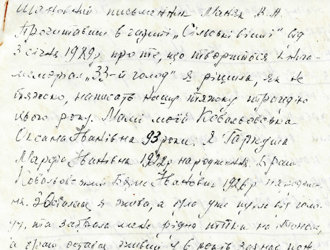
Marfa Harkusha, née Marfa Kovaliovska, was born in 1922. She describes the events that occurred during the Holodomor in the settlement of Nova Praha, Oleksandriia raion, Kirovohrad oblast (Dnipropetrovsk oblast at the time).
Harkusha was one of four children in the Kovaliovsky family. Her father Ivan, 47, and her two younger brothers, four-year-old Viktor and eight-year-old Petro, died of starvation. Her aunt, who lived in the Donbas, took her in. Her mother Oksana and six-year-old brother Borys stayed behind and struggled to survive.
After a search brigade took away all their grain, the family ate horse meat from the animal burial ground. Marfa’s father tried to have the state repay him 20 rubles that he was owed from a state loan program. He visited [the place where he was supposed to get his money] every day for a week while the children waited for him to buy some millet and cook some porridge. But he never did receive the money which was owed to him and died of starvation. He was buried by neighbors.
Marfa’s mother was away at the time. She went to Belarus to trade some clothes for food. Marfa’s two younger brothers became swollen and died in one night. Marfa’s mother buried them in the family’s garden. Since then, she cried every time she ate any bread. It reminded her of how her deceased children were begging for bread.
Harkusha’s brother Borys sneaked into a mill and a bakery in search of food. He was thrown into a well once, but managed to climb out of there because the walls of the well were made of wooden logs.
Harkusha also lists the names of her uncle Fedosii, aunt Natalia and their two daughters, Paraska and Marfa Kovaliovsky, who died during the Holodomor.

